

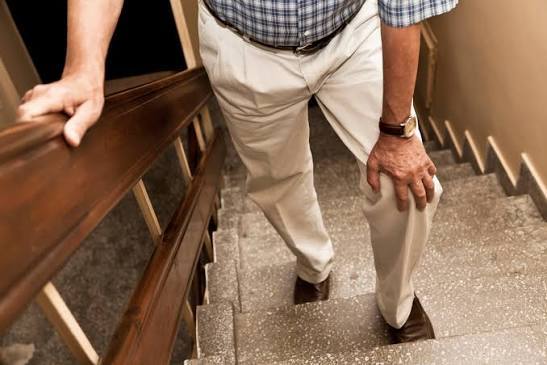
Climbing stairs should not leave your knees feeling sharp, stiff, or unusually painful. If you regularly experience knee pain while climbing stairs, especially when going up or down, it may be a sign that something is affecting the knee joint.
One possible cause is arthritis, particularly osteoarthritis. However, stair-related knee pain does not automatically mean you have arthritis. Problems involving the kneecap, muscles, tendons, cartilage, ligaments, or other structures around the knee can also cause discomfort.
Understanding why your knee hurts on stairs can help you decide when it is time to seek professional evaluation.
Why Does My Knee Hurt While Climbing Stairs?
The knee joint carries a significant portion of your body weight and works under increased load when you climb or descend stairs.
When you climb stairs, the muscles and structures around the knee have to work harder to support and move your body. If the joint or surrounding tissues are irritated, this additional demand can make symptoms more noticeable.
Common causes of knee pain on stairs include:
- Knee osteoarthritis
- Patellofemoral pain
- Kneecap problems
- Tendon irritation
- Previous knee injuries
- Meniscus problems
- Muscle weakness around the hip or knee
- Excessive or sudden physical activity
- Age-related changes in the knee joint
The location and nature of the pain can provide useful clues, but a proper diagnosis requires an examination by an experienced orthopedic specialist.
Is Knee Pain on Stairs an Early Sign of Arthritis?
It can be.
Knee arthritis may initially cause pain during activities that place greater demand on the joint. Climbing stairs, squatting, standing for extended periods, or walking longer distances may become uncomfortable before pain starts occurring during everyday activities.
Early symptoms may include:
- Pain when climbing or descending stairs
- Knee stiffness after sitting for a long time
- Pain after prolonged walking
- Mild swelling around the knee
- Reduced flexibility
- A feeling of stiffness when getting up from a chair
- Clicking or grinding sensations
- Difficulty performing activities that were previously comfortable
However, these symptoms are not specific to arthritis. That is why self-diagnosing based only on stair pain is not recommended.
Why Does Going Downstairs Sometimes Hurt More?
Some people notice that descending stairs is more uncomfortable than climbing them.
This can happen because the knee has to control the body’s movement while supporting body weight. The kneecap and surrounding structures may experience considerable stress during this movement.
Pain that is particularly noticeable around or behind the kneecap may sometimes be associated with patellofemoral problems rather than arthritis alone.
If the pain continues, becomes progressively worse, or starts affecting everyday activities, an orthopedic evaluation can help determine the underlying cause.
Knee Pain While Climbing Stairs vs Normal Knee Discomfort
Occasional discomfort after an unusually demanding activity does not necessarily indicate a serious knee problem.
The concern increases when the pain:
- Keeps returning
- Gradually becomes more frequent
- Is accompanied by swelling
- Causes stiffness
- Limits walking or stair climbing
- Occurs even during normal daily activities
- Continues despite rest
- Is associated with instability or the feeling that the knee may give way
Persistent symptoms deserve attention rather than being dismissed as a normal part of getting older.
What Happens to the Knee During Arthritis?
In a healthy knee, smooth cartilage helps the bones move against each other with minimal friction.
With osteoarthritis, the cartilage and other structures within the joint can undergo degenerative changes. Over time, this may contribute to pain, stiffness, swelling and reduced movement.
As knee arthritis progresses, activities such as:
Walking → climbing stairs → squatting → standing from a chair → longer-distance walking
may become increasingly difficult.
Not everyone follows the same progression, and symptoms can vary considerably between individuals.
Does Knee Pain Always Mean You Need Knee Surgery?
Experiencing knee pain on stairs does not automatically mean that you need knee surgery.
Treatment depends on the underlying diagnosis, severity of symptoms, functional limitations, age, activity level, previous injuries and overall health.
Depending on the cause, treatment may include:
- Activity modification
- Physiotherapy and strengthening exercises
- Weight management when appropriate
- Medication prescribed by a doctor
- Treatment for specific tendon or soft-tissue conditions
- Injections in selected cases
- Surgical treatment when conservative options are insufficient or when there is a clear structural problem
The objective should be to identify the cause of the pain and choose an appropriate treatment rather than assuming surgery is necessary.
When Should You See an Orthopedic Doctor?
Consider consulting an orthopedic specialist if your knee pain is persistent, recurrent or interfering with your daily activities.
You should pay particular attention if you experience:
- Persistent Pain
If knee pain continues for weeks or repeatedly returns, it deserves professional assessment.
- Swelling
Repeated swelling may indicate inflammation or an underlying joint problem.
- Stiffness
Difficulty bending or straightening the knee can be associated with several orthopedic conditions.
- Reduced Mobility
If you are avoiding stairs, walking less, or changing how you move because of knee pain, it is worth getting evaluated.
- Instability
A knee that feels unstable or gives way should not be ignored.
- Increasing Pain
If activities that were previously comfortable are becoming painful, early assessment may help identify the problem.
How Is Knee Arthritis Diagnosed?
An orthopedic doctor usually begins with a detailed discussion about your symptoms, medical history and activity limitations.
The examination may assess:
- Knee movement
- Tenderness
- Swelling
- Alignment
- Stability
- Muscle strength
- Walking pattern
Depending on the findings, imaging such as X-rays or other investigations may be recommended.
The important point is that treatment should be based on a diagnosis rather than simply treating the symptom of knee pain.
Can Early Knee Arthritis Be Managed Without Surgery?
In many cases, treatment can begin with non-surgical measures.
Your orthopedic specialist may recommend an individualized plan involving appropriate exercises, physiotherapy, activity modification and other treatments depending on your condition.
The earlier persistent symptoms are assessed, the better you can understand what is happening inside your knee joint and what options may be appropriate.
This does not mean that every person with early arthritis will eventually require surgery. The course of arthritis varies from person to person.
When Is Knee Replacement Considered?
Knee replacement is generally considered when advanced knee arthritis causes significant pain and disability and other appropriate treatments have not provided adequate relief.
A patient may have difficulty:
- Walking
- Climbing stairs
- Standing for extended periods
- Sleeping because of knee pain
- Performing routine activities
- Maintaining their normal level of independence
The decision should be individualized after clinical assessment and appropriate imaging.
For patients who eventually require surgery, an experienced orthopedic surgeon for knee replacement can discuss the available surgical approaches and whether a particular technique is suitable.
Should You Ignore Knee Pain Because of Your Age?
Knee pain is common, particularly as people get older, but persistent pain should not simply be accepted as an unavoidable part of ageing.
A painful knee can have several causes, and some conditions can be managed effectively without surgery.
Getting an accurate diagnosis can help you understand whether the problem is arthritis, a soft-tissue condition, an old injury or another issue affecting the knee.
How Can You Protect Your Knee Joint?
While not every knee problem can be prevented, maintaining healthy habits can support joint function.
Depending on your individual health and orthopedic condition, these may include:
- Maintaining a healthy body weight
- Building strength around the legs and hips
- Staying physically active with suitable exercises
- Avoiding sudden increases in high-impact activity
- Treating significant knee injuries appropriately
- Following professional advice when persistent pain develops
If you already have knee pain, however, exercise should be appropriate for your condition. A doctor or physiotherapist can guide you on suitable activities.
Frequently Asked Questions
No. Arthritis is one possible cause, but knee pain on stairs can also occur because of kneecap problems, tendon irritation, previous injuries, muscle weakness and other conditions.
Stair climbing places greater demands on the knee than ordinary walking. Certain knee conditions may therefore become noticeable during stairs before they cause pain during regular walking.
Descending stairs requires the knee to control your body's movement while supporting your weight. Problems involving the kneecap or other knee structures can become more noticeable during this movement.
Depending on the severity and cause of symptoms, many patients can initially be managed with non-surgical treatments. The appropriate approach should be determined after an orthopedic evaluation.
Knee replacement may be considered when advanced arthritis causes substantial pain and functional limitations and appropriate non-surgical treatments are no longer providing sufficient relief.
If knee pain is persistent, worsening, associated with swelling or instability, or affecting your ability to walk and use stairs, an orthopedic evaluation is advisable.
Don't Let Persistent Knee Pain Become Your New Normal
Pain while climbing stairs may be an early warning that your knee needs attention, but it does not automatically mean you have arthritis or need surgery.
The right first step is understanding why your knee hurts.
If persistent knee pain is affecting your mobility, an evaluation by an experienced orthopedic specialist can help identify the cause and guide you toward an appropriate treatment plan.
Dr. Deepak Inamdar provides orthopedic care in Bengaluru, with a focus on knee conditions and knee replacement surgery.
If your knee pain is making everyday activities such as walking, climbing stairs or getting up from a chair difficult, consider scheduling a consultation to have your symptoms evaluated.
Don’t wait until simple movements become difficult.
Book an appointment with Dr. Deepak Inamdar, Orthopedic Surgeon in Bangalore, for a professional evaluation of your knee pain.
