

Knee pain can make everyday activities difficult. Walking, climbing stairs, standing for long periods, or getting up from a chair may become painful when the knee joint is damaged. When medicines, physiotherapy, and other treatments no longer provide enough relief, knee replacement surgery may be considered.
Total knee replacement surgery is a procedure that replaces damaged joint surfaces with artificial components. It is commonly used to treat advanced knee arthritis and other conditions that cause severe pain and limit movement.
For patients considering knee replacement surgery in Bangalore, understanding the procedure, available surgical options, implant choices, and recovery process can help them make informed decisions.
Dr. Deepak N. Inamdar is a Senior Consultant Orthopaedic and Robotic Joint Replacement Surgeon practising at Apollo Specialty Hospital, Jayanagar, Bengaluru. His clinical practice includes robotic-assisted and conventional knee replacement surgery.
What Is Total Knee Replacement Surgery?
Total knee replacement, also called total knee arthroplasty, is a surgical procedure in which the damaged surfaces of the knee joint are replaced with artificial components.
The knee joint contains the lower end of the thigh bone (femur), the upper end of the shin bone (tibia), and the kneecap (patella). These structures work together to support body weight and allow the knee to bend and straighten.
Conditions such as osteoarthritis can damage the cartilage that protects the joint surfaces. As the cartilage wears away, the bones may rub against each other, causing pain, stiffness, swelling, and reduced movement.
During a total knee replacement, the surgeon removes the damaged joint surfaces and prepares the bone to receive artificial components. These usually include metal components and a medical-grade plastic spacer that allows the joint surfaces to move against each other.
The goal is to reduce pain, improve joint function, and help patients return to suitable daily activities.
When Should You Consider Knee Replacement Surgery?
Not every person with knee pain needs surgery. Many knee problems can be managed with medication, exercise, physiotherapy, lifestyle changes, or other non-surgical treatments.
An orthopaedic doctor in Bangalore may recommend an assessment for knee replacement when symptoms continue despite appropriate treatment.
Common signs that a surgical evaluation may be needed include:
- Persistent knee pain that affects daily activities.
- Pain while walking, standing, or climbing stairs.
- Knee stiffness that limits bending or straightening.
- Difficulty getting up from a chair or using the toilet.
- Pain that disturbs sleep or occurs even during rest.
- Visible changes in knee alignment, such as bowing of the legs.
- X-ray findings showing advanced joint damage.
The decision depends on the severity of symptoms, examination findings, imaging results, general health, and the patient’s goals.
Age alone does not determine whether someone is suitable for surgery. The focus is on the condition of the joint, overall health, and the likely benefits and risks of treatment.
What Are the Different Types of Knee Surgery?
The term knee surgery covers several procedures. The right option depends on the problem affecting the joint.
- Total Knee Replacement Surgery
Total knee replacement involves replacing the damaged joint surfaces across the main weight-bearing parts of the knee.
It may be considered when arthritis has affected several areas of the joint and other treatments have not provided adequate relief.
The procedure aims to reduce pain and improve the ability to walk and perform everyday activities.
- Partial Knee Replacement Surgery
A partial knee replacement replaces only the damaged compartment of the knee.
It may be suitable for selected patients whose arthritis is limited to one part of the joint, with the remaining cartilage, ligaments, and other structures meeting the requirements for surgery.
Because less of the joint is replaced, the procedure differs from a total knee replacement. However, not everyone with localised knee pain is eligible.
- Bilateral Knee Replacement
Bilateral knee replacement refers to replacing both knee joints.
Depending on the patient’s health and surgical assessment, both knees may be replaced during one operation or through two separate procedures.
The decision considers factors such as heart and lung health, medical conditions, age, mobility, and the risks associated with a longer operation and recovery.
- Revision Knee Replacement Surgery
Revision surgery is performed when an existing knee replacement requires further treatment.
Possible reasons include implant wear, loosening, infection, instability, or persistent problems related to the artificial joint.
Revision surgery is often more complex than a first-time knee replacement and requires careful evaluation.
- Robotic-Assisted Knee Replacement
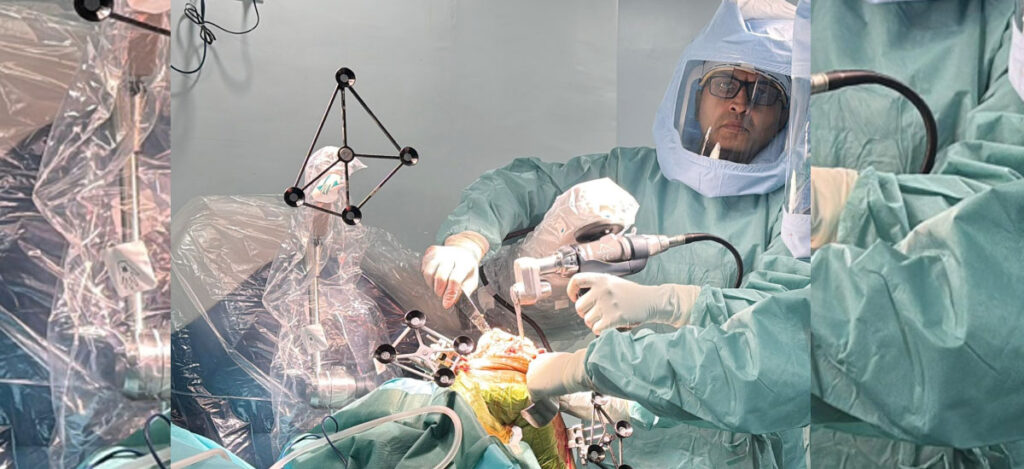
Robotic-assisted knee replacement uses computer-based planning and a robotic system to assist the surgeon during selected parts of the procedure.
For example, Mako robotic-assisted knee replacement uses a three-dimensional model of the knee to help plan implant positioning and guide bone preparation.
The surgeon remains responsible for the procedure and clinical decisions. Robotic assistance is a surgical tool, not a replacement for the surgeon’s experience.
Whether robotic-assisted or conventional surgery is appropriate depends on the patient’s anatomy, condition, surgical requirements, and the surgeon’s assessment.
How Is Total Knee Replacement Surgery Performed?
The process generally involves three stages: preparation, surgery, and rehabilitation.
Before the Procedure
The surgeon reviews the patient’s symptoms, medical history, medicines, and previous treatments. A physical examination and knee X-rays help assess joint damage and alignment.
Additional tests may be required to evaluate overall health and prepare for anaesthesia.
Patients may be advised to:
- Discuss all medicines and supplements with their doctor.
- Manage existing health conditions before surgery.
- Follow instructions about eating and drinking before anaesthesia.
- Arrange support at home for the initial recovery period.
- Begin recommended exercises to prepare for rehabilitation.
Patients should not stop prescribed medicines or change their dosage without medical advice.
During the Procedure
Knee replacement is performed under appropriate anaesthesia.
The surgeon makes an incision to access the joint, removes the damaged cartilage and a small amount of underlying bone, and prepares the surfaces for the implant.
The artificial components are positioned according to the surgical plan. A plastic spacer is placed between the components to support movement.
The surgeon checks the knee’s alignment, stability, and range of motion before closing the incision.
The procedure may be performed using conventional surgical techniques or robotic assistance, depending on the treatment plan.
After the Procedure
After surgery, the medical team monitors the patient’s condition and begins postoperative care.
Pain management, wound care, prevention of blood clots, and early movement are important parts of recovery.
A physiotherapist guides the patient through exercises and supported walking when medically appropriate.
Patients receive instructions about wound care, medicines, follow-up visits, and activity restrictions before discharge.
What Is the Best Knee Replacement Implant?
There is no single implant that is best for every patient. The appropriate implant depends on the patient’s anatomy, activity level, bone quality, ligament condition, medical needs, and the surgeon’s assessment.
Common implant materials and design features include:
Metal alloy implants: These form the main femoral and tibial components in many knee replacement systems.
High-performance plastic inserts: These provide a smooth surface between the artificial components and help support knee movement.
Oxidised zirconium and other specialised materials: Some implant systems use alternative bearing materials designed for particular clinical requirements.
Implants also differ in shape, fixation method, and design. Some are cemented to the bone, while others use designs intended for biological fixation.
When discussing the best knee replacement implant for an individual patient, important questions include:
- Is the implant suitable for the patient’s anatomy?
- Does it provide the stability required by the knee?
- Is the implant design appropriate for the patient’s condition?
- What are the expected benefits, limitations, and potential risks?
- What follow-up care will be required?
Implant selection should be based on clinical suitability and available evidence rather than brand name alone. No implant can guarantee a particular lifespan or outcome.
Robotic-Assisted Knee Replacement in Bangalore
Robotic-assisted knee replacement is an option for selected patients who require joint replacement surgery.
Dr. Deepak N. Inamdar offers Mako robotic-assisted knee replacement alongside conventional knee replacement procedures at Apollo Specialty Hospital, Jayanagar, Bengaluru. His practice also includes assessment for partial knee replacement where appropriate.
Robotic systems can help the surgeon plan implant positioning and guide bone preparation based on the patient’s knee anatomy.
Potential advantages of robotic assistance include:
- Detailed, patient-specific surgical planning.
- Real-time guidance during selected surgical steps.
- Support for assessing joint alignment and balance.
- Assistance with consistent implant positioning according to the surgical plan.
However, robotic assistance does not eliminate the risks of surgery or guarantee faster recovery, less pain, or better long-term results for every patient.
Patients should discuss whether robotic assistance offers a meaningful advantage for their specific condition.
Learn more about Mako Robotic Knee Replacement Surgery.
Recovery After Total Knee Replacement Surgery
Recovery varies from person to person. Factors such as age, general health, muscle strength, surgical technique, and the ability to follow rehabilitation instructions can influence progress.
The First Few Days
Patients are usually encouraged to begin safe movement and walking with assistance when their medical condition permits.
Physiotherapy focuses on gentle knee movement, strengthening exercises, and learning how to walk safely with a suitable walking aid.
The hospital stay depends on recovery, medical needs, and the treating team’s assessment.
The First Six Weeks
During the initial weeks, patients gradually work on improving knee movement, walking ability, and muscle strength.
A walking aid may be needed until balance and confidence improve. Patients should follow their physiotherapist’s instructions and avoid increasing activity too quickly.
Two to Three Months
Many patients notice meaningful improvements in pain, movement, and daily function during this period. Progress is not the same for everyone, and some people need additional time.
Six to Twelve Months
Strength, flexibility, comfort, and confidence may continue to improve over several months.
Regular follow-up and prescribed exercises remain important. The surgeon should be informed about increasing pain, wound problems, fever, or unexpected swelling.
What Are the Risks of Knee Replacement Surgery?
Total knee replacement is a major operation, and complications can occur even when appropriate precautions are taken.
Possible risks include:
- Infection around the surgical wound or artificial joint.
- Blood clots in the legs or lungs.
- Bleeding or wound-healing problems.
- Stiffness or limited knee movement.
- Persistent pain or swelling.
- Implant loosening, wear, or instability.
- Injury to nearby nerves or blood vessels.
- Risks related to anaesthesia or existing medical conditions.
The surgeon and medical team assess individual risk factors before surgery and take appropriate steps to reduce complications.
Patients should seek urgent medical assessment for symptoms such as sudden breathlessness, chest pain, severe calf swelling, or a high fever with worsening wound symptoms.
How to Choose an Orthopedic Doctor in Bangalore for Knee Replacement
Choosing an orthopaedic surgeon involves more than comparing the type of implant or the technology used.
Patients should consider the surgeon’s training, experience with the required procedure, approach to surgical planning, and the quality of postoperative support.
Before deciding on knee replacement surgery in Bangalore, consider asking:
- What is causing my knee pain, and how advanced is the joint damage?
- Are there non-surgical treatments that I should try first?
- Do I need a total or partial knee replacement?
- Would robotic-assisted surgery be appropriate for me?
- Which implant options are suitable, and why?
- What complications should I understand before consenting to surgery?
- How long might I need help with walking and daily activities?
- What physiotherapy and follow-up care will I need?
A clear discussion helps patients understand the available options and make decisions based on their individual needs.
Knee Replacement Surgery in Bangalore with Dr. Deepak N. Inamdar
Dr. Deepak N. Inamdar is a Senior Consultant Orthopaedic and Robotic Joint Replacement Surgeon practising at Apollo Specialty Hospital, Jayanagar, Bengaluru.
His clinical practice includes total knee replacement, robotic-assisted knee replacement, partial knee replacement, and revision joint replacement surgery.
Patients can consult him to discuss persistent knee pain, arthritis, joint damage, and whether surgical treatment may be appropriate.
Treatment planning involves evaluating the condition of the knee, reviewing medical history, discussing surgical options, and explaining the expected recovery process.
To arrange a consultation, visit the official contact page.
Clinic: Dr. Deepak Inamdar Orthopedic and Joint Replacement Center, Jayanagar, Bengaluru.
Appointment contact: +91 95354 15364.
Frequently Asked Questions
Total knee replacement may be recommended when advanced knee arthritis or joint damage causes persistent pain and limits daily activities despite appropriate non-surgical treatment. The decision follows a clinical examination and review of imaging findings.
Total knee replacement replaces the damaged joint surfaces across the main parts of the knee. Partial knee replacement treats damage limited to one compartment in suitable patients. The choice depends on the extent of arthritis and the condition of the remaining joint structures.
Recovery varies by patient. Many people make substantial progress during the first six to twelve weeks, while strength, movement, and comfort may continue to improve for six to twelve months.
Robotic assistance can help with surgical planning and implant positioning. However, it does not guarantee better results for every patient. The appropriate approach depends on the knee condition, surgical requirements, and the surgeon's assessment.
Doctors consider the patient's anatomy, bone quality, ligament stability, activity needs, and the design and materials of available implants. The most appropriate implant is the one that meets the patient's clinical requirements.
Yes, simultaneous bilateral knee replacement is possible for selected patients. Others may be advised to undergo two separate operations. The decision depends on general health, medical risk factors, and the surgeon's assessment.
Potential complications include infection, blood clots, stiffness, persistent pain, implant problems, and anaesthesia-related complications. A preoperative assessment helps identify risk factors and plan appropriate precautions.
You can arrange a consultation with Dr. Deepak N. Inamdar through his official website. Bring previous X-rays, medical reports, and a list of current medicines to help the doctor assess your condition.
Conclusion
Knee replacement surgery can be an option for people whose advanced knee joint damage causes persistent pain and difficulty with daily activities. Understanding the types of knee surgery, implant choices, possible risks, and rehabilitation process can help patients prepare for an informed discussion with their surgeon.
If knee pain is affecting your mobility, consult an orthopaedic specialist to understand the cause and explore suitable treatment options. Surgery should be considered after a careful assessment of your condition, needs, and available alternatives.
